

Number 6’s defiant announcement to his oppressors, “I am not a number. I am a free man” (McGoohan 1967b, 02:47 - 02:56), opened nearly every episode of the titular The Prisoner television series. The three-minute opening title sequence for The Prisoner would then lead audiences into the start of another episode of one of the most widely discussed yet controversial series ever made in Britain.
This essay argues that The Prisoner was so innovative that contemporary audiences lacked the cultural framework to fully appreciate it. The cult TV series produced for ITC Entertainment has been the subject of much scholarly academia that has aimed to unravel the series’ concepts and meanings. The Prisoner revolves around a secret agent who resigned from his job and is later abducted and imprisoned within the mysterious Village. The former secret agent, Number 6, is subjected to constant manipulation and surveillance by his captors. Number 6 attempts to escape the confines of the Village’s imprisonment whilst resisting his oppressors as they attempt to learn the reason behind his resignation (McGoohan 1967a). The originality of Patrick McGoohan’s ideas led to a controversial reaction to the programme’s 17-episode debut across the ITV regions between Autumn 1967 and the end of Winter 1968. Andrew Pixley’s updated 2017 book assesses viewers’ reactions with newspaper reports and reviews. Andrew Shenton’s 2022 publication compares specific aspects of the series to contemporary British television dramas. Specifically, programmes that were made simultaneously to The Prisoner’s time in production. Understanding why The Prisoner divided audiences in 1967 offers a wider insight into changing expectations of British television during the late 1960s.
The early reviews and reaction in the lead-up to The Prisoner across British tabloids promised an original and exciting new television series. Anticipation remained high for the new television series featuring Patrick McGoohan from the popular Danger Man series (Alison, 1967). The Prisoner was largely expected to be a follow-up to McGoohan’s previous series. The popularity of Danger Man inevitably shaped audience expectations, with many viewers anticipating another conventional espionage drama centred on a heroic secret agent. The run-up to The Prisoner on the ITV regions discussed the series’s exciting new premise and that the new programme differed from the types of storytelling accustomed to audiences from Danger Man (Alison, 1967). McGoohan's insistence that there was no connection between the two programmes therefore attempted to build expectations before transmission. Although contemporary publicity could not entirely separate the actor from his previous role. TV Times on 30th September 1967 in London reported that McGoohan felt he was breaking into new television history in ideas for both presentation and stories. In the article, McGoohan briefly reinforced that, “If people don’t like it, there’s only one person to blame - me!”, and confirmed, “There is connection to Danger Man, you are not going to see a follow-up to that series”. The TV Times article reported that McGoohan consciously intended to break into new territory of contemporary British television (Alison, 1967).
With early expectations formed by Danger Man, The Prisoner's unconventional style was all the more startling when the series debuted on the ITV regions. Most ITC Entertainment series rewarded viewers with clear resolutions at the end of each episode. By contrast, The Prisoner deliberately left questions unanswered, frustrating expectations that had been established by previous series. Although the opening episode, Arrival, received a positive reaction from critics. The Daily Telegraph described Arrival as a tense drama, whilst also a more sophisticated piece of television (Knight, 1968). As Free For All and The Schizoid Man were running across the ITV regions, critics remained impressed with the series (Pixley 2017, 87). Tony Gurner described in Kinematography Weekly on 28th October 1967 that, “The speed of the production and intensity of McGoohan’s performance puts this one-hour series in a British class of its own” (Gurner, 1967). The British public remained confused by the series’ enigmatic nature. Stripped apart from the Danger Man style of storytelling, viewers were writing in to question McGoohan’s concepts and their symbolism (Pixley 2017, 87). British audiences expected television narratives to provide clear resolutions. The confusion yet fascination for the series successfully helped The Prisoner to become such a talking point. The combined aspect of allegorical plotlines and complex themes with the tense thriller stories cemented The Prisoner as a unique but exciting television series. McGoohan’s response to viewers’ questions in TV Times remained muted, asking viewers to interpret The Prisoner’s meanings for themselves. After the transmission of Checkmate, one viewer described The Prisoner in TV Times as the most disappointing and ridiculous series (Record, 1967), whereas another described the programme as a highlight of their week (Conridge, 1967).
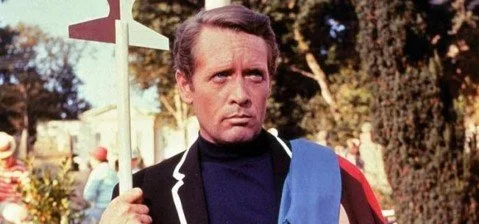
Figure 1: Number 6 renounces his oppressors within the Village. Portmeirion Village, “The Prisoner TV Show | History,” Portmeirion Village, accessed August 13, 2026
The combination of the series’ intriguing premise and sustained publicity infers that despite its divisive reception, The Prisoner possessed a distinctive appeal that encouraged audiences to return each week in search of answers. The unusual aspect of Number 6 failing to escape the Village in each episode and the unanswered mysteries behind the settings’ and characters’ whereabouts ran through the entire series. Rather than providing viewers with clear narrative closure, each episode encouraged speculation and interpretation. This unconventional approach challenged prevailing expectations of television storytelling and helps explain why audiences simultaneously criticised and remained captivated by the series. The Prisoner therefore succeeded in attracting attention not despite its ambiguities. McGoohan’s refusal to conform to established television conventions encouraged audiences to debate its meaning after every episode.
Across the series’ 17 episodes, the constant movement between genres destabilised audience expectations, contributing to contemporary confusion. The versatility of stories provided new, original and exciting stories. The series adopted visual styles associated with the wider psychedelic culture emerging in Britain during the late 1960s, reflecting broader artistic experimentation in television and popular culture. The Prisoner was produced at a time when LSD was banned in the UK and debuted on television following the Summer of Love in 1967. 1960s filmmakers began to experiment in producing dream-like experiences on screen which broke from the traditional narratives of television entertainment (Williams, 2018). Displaying flourishing, visual storytelling with distortions, bright colours, wavy special effects were combined with pop music to represent psychedelic sounds.
The Prisoner depicted brightly coloured carnivals and youths campaigning for their political rights (McGoohan 1967d, 10:30 - 10:55). This helped to cement The Prisoner, throughout the 1967 run of episodes, into contemporary popular culture. The more psychedelic aspect of The Prisoner is better represented when Number 2 attempts to break Number 6 in finding out why he resigned. Moments capturing the use of mind control or mental torture are displayed by McGoohan with abstract sequences and flared colours and visuals (McGoohan 1967d, 17:34 - 18:03). Despite the restricted black and white televisions within Britain in 1967, the loud, bombastic production values of The Prisoner helped to create an appealing television series to be entertained. The use of psychedelic imagery reflected wider cultural changes taking place in late 1960s Britain. However, McGoohan’s experimental visual techniques also departed from the more conventional style of traditional British drama shows.
As the final episodes of The Prisoner debuted at the start of 1968, the programme generated further controversy in the run-up to the series’ finale. Pixley widely discusses the series’ press attention to focus on the future of the series, alongside reviews attempting to answer some of the series’ mysteries. Performers from the final episode, Fall Out, confirmed the series would end with an exciting finish in a way the audience deserves (Pixley 2017, 96). Fall Out began transmitting on the ITV regions in February 1968. TV Times braced viewers for the finale’s ending (Davis, 1968), but in spite of this, the ATV House Switchboard was jammed with calls from disappointed viewers of the episode (Knight, 1968). Tabloids remained filled with reactions to the series as a whole, alongside critics’ interpretations of the series, followed by McGoohan’s commentary on the public’s response. Pixley effectively chose to focus McGoohan’s statements on the physical demands and strain of maintaining the high standards of the production whilst finding new, original story ideas for 17 episodes (Pixley 2017, 98).
As Fall Out deliberately aimed to deliver the series’ questions metaphorically (McGoohan 1968), many viewers remained dissatisfied that the series provided no definitive resolution. Peter Knight in the Daily Telegraph on 5th February described McGoohan’s refusal to give an explanation to the finale, “Why should I? It is their responsibility to put their own interpretation” (Knight, 1968). Undermined by reviews and statements from actors and critics, British audiences received a finale that was not a typical series ending. The reaction led McGoohan to be threatened and physically assaulted in public, forcing him to leave the country. The actor remained pleased with the public outcry to his show in providing audiences with a unique and unusual series whilst intending to outline his concerns and ideas. In Knight’s article, McGoohan felt that the audience response was, “The most marvellous thing that has happened to me in my life” (Knight, 1968). Based on this, McGoohan viewed the outrage as evidence he had succeeded in his intentions. When interviewed by TV World in November 1967, following the completion of the series, McGoohan described his commitment to create first-class entertainment (Mike Tomkies, 1967). Taking the responsibility of directing, writing, producing, as well as starring in the show was felt by McGoohan, in the article, to be an exciting opportunity for him. As the 17 episodes of The Prisoner were spread across the ITV regions and at various different viewing hours, many regions in Britain only afforded viewers one opportunity to view the series. Screened once on a weekly basis, British audiences were therefore unable to reassess the series and interpret its concepts. The Prisoner would have been appreciated further if contemporary audiences were allowed to rewatch the series, knowing the climax of the series.
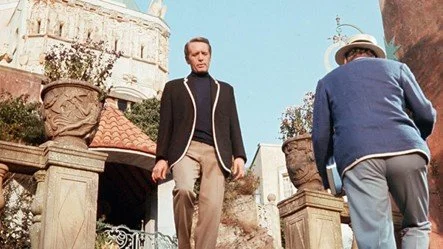
Figure 2: Portmeirion, North Wales was selected for the scenery of the Village. Portmeirion Village, “The Prisoner TV Show | History,” Portmeirion Village, accessed August 13, 2026.
Many contemporary British dramas played it safe by representing themes concerning identity and nationality with action drama series or programmes surrounding the exploits of philanthropists. This traditional formula was closer to the public’s expectation of a television series. The Prisoner followed directly on from an action-adventure series with Danger Man, where audiences inevitably carried the same expectations from McGoohan’s previous series. The audience's expectation of repeating Danger Man’s style of storytelling helped to shape The Prisoner’s disorientating reaction upon the series’ initial run.
The superficial element of The Prisoner was easily identifiable, featuring control areas or secret lairs that monitor surveillance technology of the Village. Critics commonly picked up on the comparison of contemporary science fiction in which The Prisoner bore too much resemblance to other similar series. Peter Black from The Daily Mail on 2nd October 1967 described, “The superficial element of the series on the James Bond films, Thunderbirds, petrol commercials, and Alice In Wonderland” (Peter Black, 1967). The Cold War representation of the Village was displayed with apparently innocent objects and devices located across the Village. Number 6’s actions were, therefore, heavily monitored by the Village’s authorities. The attractive, luxury paradise of the setting of The Prisoner was littered with bugging devices and secret cameras built within statues (McGoohan 1967a, 27:50 - 28:10) and in areas concealed within bedrooms (McGoohan 1967b, 08:46 - 09:50). Control functions allowed the surveillance from different monitors, allowing Number 2 and his assistants to easily overrule the Village (McGoohan 1967b, 15:47 - 16:10) . Scientific instruments were capable of operating and dissecting the minds of subjects. Number 6 underwent various scientific experiments and mental processes under this equipment in episodes that were more science fiction-focused (McGoohan 1967c).
Critics regularly compared the knobs, switches, and buttons within The Prisoner’s science-fiction depiction to the Supermarionation series produced by Gerry and Sylvia Anderson. Devices used by organisations, outlined in Shenton’s comparisons, such as International Rescue within Thunderbirds (Shenton 2022, 198), which first began transmitting on the ITV regions two years before The Prisoner, displayed an all-American family acting on benevolent missions dedicated to preserving life (Anderson, 1965). By the time The Prisoner originally debuted, the series was running simultaneously on ITV with the Andersons’ latest series, Captain Scarlet And The Mysterons. The global security organisation Spectrum seen within Captain Scarlet was similarly compared to the versatility of scope of the Village’s presence in the world (Shenton 2022, 198). Whilst both Anderson series presented various members of their organisations with different nationalities, the majority of participants within the Village are strictly British.
Thunderbirds’ spy-thriller element was served by British London agent and aristocrat Lady Penelope and her cockney servant and butler, Parker. Throughout Thunderbirds, technology saved lives, organisations and heroes were trustworthy, and morality in the members of International Rescue was clearly depicted (Anderson, 1965). The Prisoner saw technology control the Village, and Number 2’s authority was not to be trusted (McGoohan 1967a). Captain Scarlet’s Spectrum organisation ran on paternalistic lines and was formed to maintain the world at global peace (Anderson, 1967). Hostile threats from renegade independent groups or Martian menaces prompted the big organisations of Anderson’s shows (Shenton 2022, 198). Within The Prisoner, Shenton stated that the Village acted under its own political allegiance in providing order and society for its residents. Authority and governance, in comparison to Anderson’s shows, were more morally ambiguous in their motivations (Shenton 2022, 198). This reflects McGoohan's far greater scepticism towards institutions than was typical of contemporary ITV adventure series. Pixley described McGoohan’s motivations in forming The Prisoner as harbouring ideas that discussed freedom that an individual had within 1960s Britain (Pixley 2017, 11). Self-respect and individuality were placed as key issues for McGoohan in addressing. McGoohan expressly aimed to create a series not only that differed from contemporary dramas, but to focus on the nature of conflicting ideological norms within society. Number 6 rebelled from order and conformity and acted under his own motivations to escape the Village’s imprisonment. The titular title character only acted as a traditional, heroic protagonist if Number 6 was offered an opportunity of escape (McGoohan, 1967b). Rather than suggesting direct influence, these comparisons demonstrate how McGoohan departed from conventions already familiar to British television audiences.
By the time spy thriller, espionage series The Champions debuted on ITV, The Prisoner had finished transmitting across the regions. Shenton draws upon The Interrogation episode as an example of a series to contradict Shenton’s reference to The Champions as a far more run-of-the-mill series compared to The Prisoner (Shenton 2022, 119). Both shows involved spies, imprisonment, and psychological torture, yet The Champions was a more conventional adventure series. The comparison demonstrates that audiences were not rejecting espionage or psychological drama itself. Rather, they were reacting to McGoohan's refusal to provide clear explanations or conventional narrative resolution. The Interrogation is recognised by viewers to be a popular episode of The Champions (Shenton 2022, 120). Breaking from the more traditional melodrama and easier plots to follow, of The Champions, The Interrogation saw a similar secret agent to that of Number 6, Craig Stirling, being broken down in solitary confinement. The intention of his torture, made, in fact, by his own organisation, which was not revealed until the end of the episode, was to learn the truth behind Stirling and his colleagues’ special abilities (Berman and Spooner 1969).
Shenton effectively described the titular Champions of the series to possess superhuman qualities in a similar fashion to Number 6 (Shenton, 2022, 122). McGoohan’s Prisoner combated in fight sequences, possesses a wealth of secret information and knowledge, and underwent severe mental and physical torture. The three Champions of the series were granted telepathic communication, super strength, super hearing, and other heroic-like powers. The Interrogation replayed scenes of the opening episode of The Champions to recall how Craig Stirling and his colleagues led to receiving their extraordinary powers (Berman and Spooner 1969, 00:00 - 01:01). Only one of the Champions is regularly present in this episode (Berman and Spooner 1969). Craig Stirling’s actions of identifying his surroundings were matched by Shenton to Number 6’s first arrival at the Village (Shenton 2022, 121). Presented with an unnatural scenario for both characters, throughout The Interrogation, and indeed across the remainder of The Prisoner, both Number 6 and Stirling begin to uncover the intentions behind their situation. Stirling’s scale of his imprisonment is far smaller than Number 6’s Village. Similar abstract sequences inspired from The Prisoner are utilised for Stirling’s interrogation (Berman and Spooner 1969). The unusual tone for this episode of The Champions was maintained by Shenton. He solidified The Interrogation as a key episode in The Champions’ run by displaying a Prisoner-esque Cold War theme of breaking down spies in order for the organisation to learn their secrets (Shenton 2022, 124).
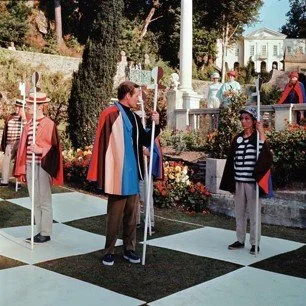
Figure 3: Number 6 and Village residents play on a giant chessboard. Portmeirion Online, “The Prisoner,” Portmeirion Online, accessed August 13, 2026.
Since the Winter of 1968, The Prisoner has gained a unique reappraisal that has spawned a cult following, unmatched by many other contemporary British dramas. The show was repeated in a minority of ITV regions until the early 1970s. Broadcasters instead opted to transmit other, more well-received shows as repeats of programmes fought for space in ITV scheduling as new imports and television shows were beginning to air. Many other contemporary British programmes have also enjoyed a reappraisal, but less so for their concepts and ideology and more for their continued public popularity. The Prisoner was networked on CBS from the Summer of 1968, generating further mixed reviews and appreciation on American television. In particular, the western-themed Living In Harmony was a story that was censored by American transmissions based on affairs concerning America’s presence in Vietnam during the Cold War. From the 1970s, following a rerun of the series by ITV, The Prisoner has been reappraised for its representations and themes and then later in the mid 1980s. Books, reviews, and documentaries have praised the series’ artistic storytelling. The Prisoner has continued to be revived with remakes and audios alongside continued releases of the series in physical media presentations. Audiences have therefore been allowed to assess the series more easily and attain a new appreciation by analysing McGoohan’s references and inferred meanings. Patrick McGoohan’s The Prisoner has generated a successful following because the series was allowed to be open to any form of interpretation. Each generation has since been offered a new take on The Prisoner’s messages, which has allowed the British television series to remain open for discussion.
Bibliography
Primary sources;
AP Record. “Viewerpoint.” TV Times, November 18–24, 1967.
Black, Peter. Daily Mail, October 2, 1967.
Conridge, H. “Six to One.” TV Times, December 2–8, 1967.
Davis, Anthony. “Patrick McGoohan Talks.” TV Times, February 3–9, 1968.
Gruner, Tony. Kinematography Weekly, October 28, 1967.
Knight, Peter. Daily Telegraph, October 3, 1967.
Knight, Peter. “Angry Viewers Left in Dark on ‘Prisoner’.” Daily Telegraph, February 5, 1968.
Portmeirion Online. “The Prisoner.” Portmeirion Online. Accessed August 13, 2026.
Portmeirion Village. “The Prisoner TV Show | History.” Portmeirion Village. Accessed August 13, 2026.
Russell, Alison. “New for London.” TV Times, September 30–October 6, 1967.
Tomkies, Mike. TV World, November 25–December 1, 1967.
Visual media:
Anderson, Gerry, creator. 1965. “Trapped in the Sky.” Thunderbirds. ITV (ATV Midlands), September 30, 1965.
Anderson, Gerry, creator. 1967. “The Mysterons.” Captain Scarlet and the Mysterons. ITV (ATV Midlands), September 29, 1967.
Berman, Monty, and Dennis Spooner, creators. 1969. “The Interrogation.” The Champions. ITV (ATV Midlands), January 29, 1969.
McGoohan, Patrick, creator. 1967a. “Arrival.” The Prisoner. ITV (ATV Midlands), September 29, 1967.
McGoohan, Patrick, creator. 1967b. “The Chimes of Big Ben.” The Prisoner. ITV (ATV Midlands), October 6, 1967.
McGoohan, Patrick, creator. 1967c. “A, B, and C.” The Prisoner. ITV (ATV Midlands), October 13, 1967.
McGoohan, Patrick, creator. 1967d. “Free for All.” The Prisoner. ITV (ATV Midlands), October 20, 1967.
McGoohan, Patrick, director. 1968. “Fall Out.” The Prisoner. ITV (ATV Midlands), February 2, 1968.
Secondary sources:
K. Shenton, Andrew. The Prisoner Compared. Brynmwar, (Quoit Media Limited, 2022), 119 -122, 124, 198.
Pixley, Andrew. The Prisoner, An Illustrated History. (Network Distributing, 2017) 11, 87, 96, 98.
Williams, Polly, “A new play, All You Need is LSD, tracks the importance of psychedelic drugs beyond just flower power. Is it time for a third ‘summer of love’?”, BBC Culture, accessed 8th August 2026, How LSD influenced Western culture - BBC Culture
Note: Right Image Cover (By Bexim - Own work, CC BY-SA 3.0, https://commons.wikimedia.org/w/index.php?curid=26870785)